Why “Sorry, We’re Closed” Is the Fastest Way to Kill Your SaaS
Let’s be real for a second. If you’re running a SaaS company in 2026, the sun never sets on your users. While you are sleeping in Detroit, a developer in Singapore is trying to integrate your API. A marketing manager in London is trying to export a report for a 9:00 AM meeting.
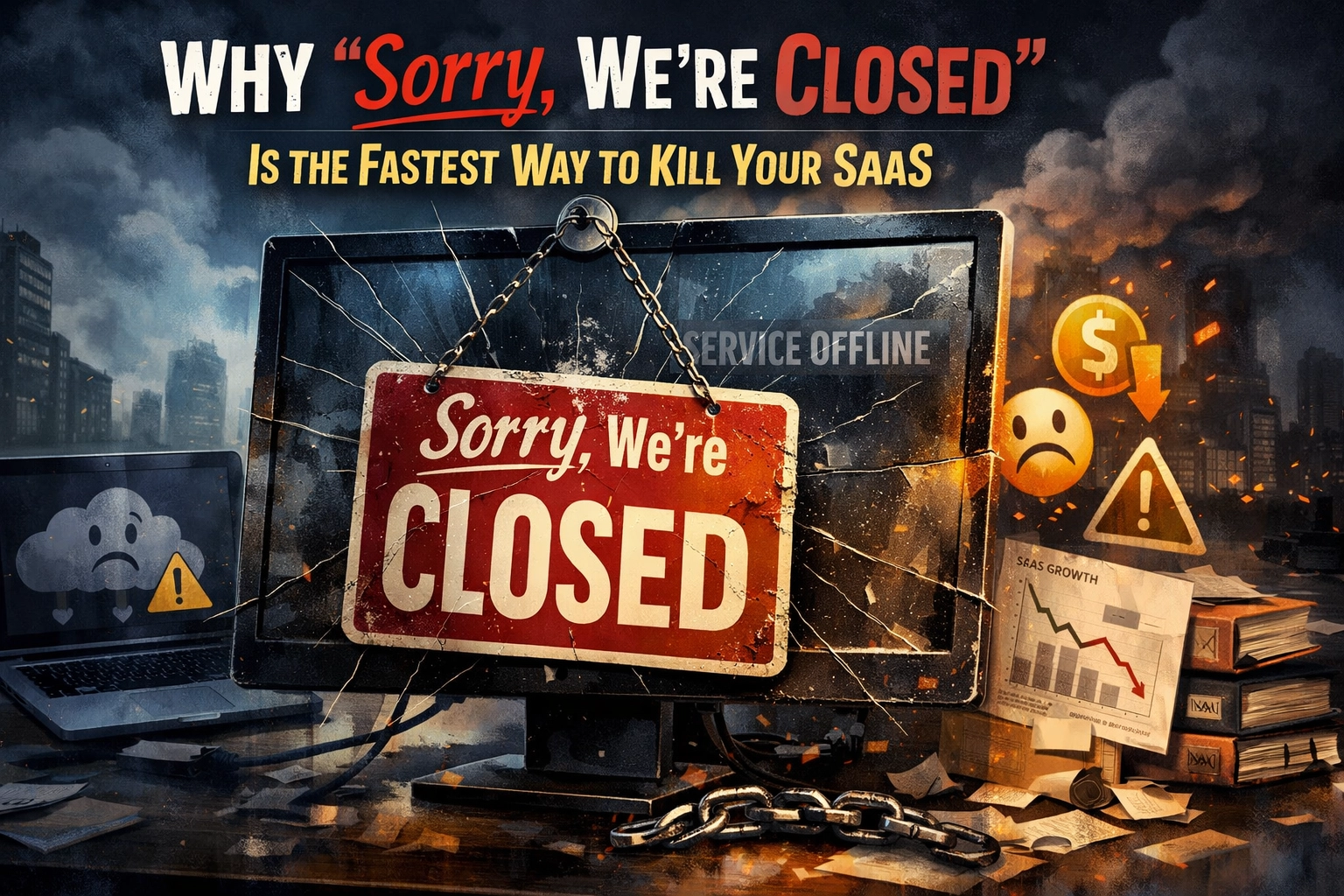
When those users hit a snag and see an auto-responder that says, "Our office hours are 9 to 5 EST. We’ll get back to you on Monday," you aren't just setting a boundary. You are telling your customer to go find a competitor who stays awake.
In the software world, "Sorry, we’re closed" is a death sentence. It signals to the market that your company is a small-town shop, not a professional global utility.
I’m Jenkins, Founder and Chief Architect here at Malkant Group: Service Readiness Institute. I’ve spent years watching SaaS leaders struggle with this exact friction. They think the solution is hiring more people to "answer emails." It’s not. The solution is building an operating system that makes your service "Ready" even when you are offline.
The Story of ApexFlow: A Cautionary Tale
Let's talk about a fictionala SaaS company called ApexFlow. They had a great product: a project management tool that was gaining traction. Their founder, Sarah, was proud of her "scrappy" team. They handled support via a shared inbox.
For the first year, it worked. But as they expanded into Europe and Asia, the cracks appeared. A major enterprise client in Berlin ran into a critical bug at 10:00 AM their time. That was 4:00 AM for Sarah’s team. By the time the support lead logged in at 9:00 AM EST, the Berlin client had already tweeted their frustration and started a trial with a competitor.
Sarah’s team wasn't lazy. They were just stuck in a "Business Hours" mindset. They were trying to solve a global problem with a local schedule.
Research shows that 32% of customers will not return after experiencing a single technical difficulty or poor service experience. For a SaaS business, where churn is the primary enemy, those "closed" signs are bleeding your revenue dry. Amazon once lost $34 million in a single hour of downtime. While your scale might be different, the principle is identical: every minute you are "unavailable" is a minute your customers are looking for the exit.

The Friction That Kills Growth
Most SaaS leaders fall into one of two traps:
- The Burnout Trap: You tell your team they need to be "on call" 24/7. This leads to high turnover, sloppy mistakes, and a culture of exhaustion.
- The Rigid Trap: You stick to strict hours and accept the "lost" customers as a cost of doing business.
Both of these are failures of design. The friction isn't caused by your customers being in different time zones. The friction is caused by a gap between user needs and your support availability.
When a user encounters a "we're closed" message, they don't see a work-life balance. They see operational immaturity. They see a service they can't rely on when things get tough.
Moving from "Answering Emails" to a "Service Ready" Operating System
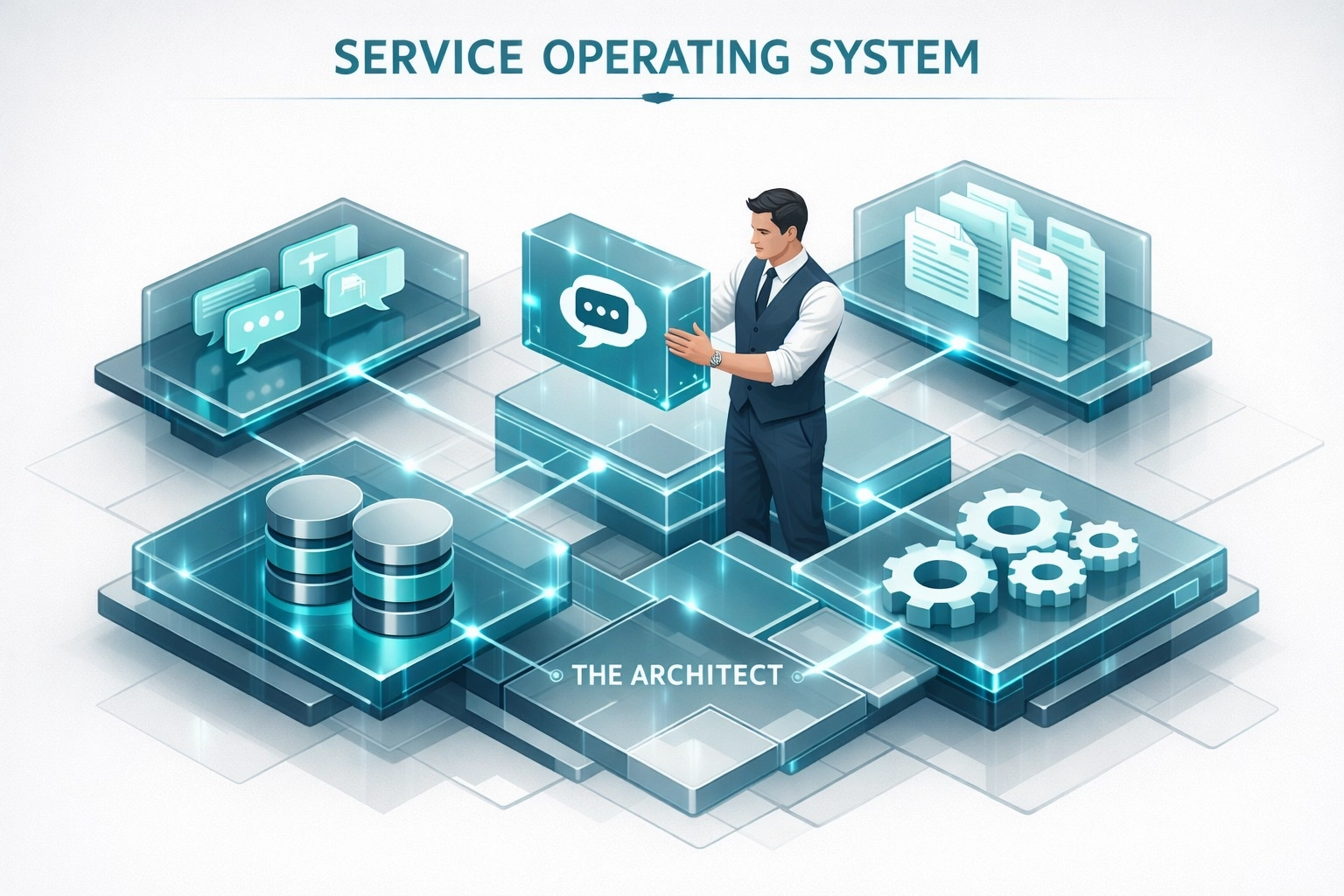
To survive, you have to stop "answering emails" and start "managing a professional operating system." This is the core philosophy at Malkant Group's Service Readiness Institute.
A Service Ready system doesn't mean you personally stay awake all night. It means your company has the protocols, documentation, and automated workflows to guide a user to a solution without needing a human to hold their hand.
Step 1: Establish Document Protocols
You can't scale service if the answers are only in your head or buried in Slack threads. Clear documentation is the backbone of availability. If a user can find the answer in a well-structured knowledge base, you are "open" 24/7.
If you haven't yet defined your documentation standards, you are already behind.
Step 2: The Efficiency Lab Audit
At the Service Readiness Institute, we teach a 7-step systems audit called The Efficiency Lab. This is how we move companies from "frantic" to "functional."
- Identify Bottlenecks: Where do users get stuck when you aren't there?
- Prioritize & Automate: What are the top 10 questions asked after hours? Automate the answers.
- Tool Selection: Are you using a "shared inbox" or a system that routes intelligence?
- SOP Development: Create Standard Operating Procedures that a junior hire can follow with 100% accuracy.
- Gap Analysis: Compare your current response time to the industry baseline.
- Close the Gap: Build the bridge between "we're closed" and "here is your solution."
- Error Analysis: Review the failures. Why did a user feel the need to wait for a human?
The Service Readiness Membership: A Year of Discipline
Building a professional operating system isn't a weekend project. It requires a fundamental shift in how your leadership team thinks. That is why we designed the Service Readiness Institute as an annual membership.
We don't believe in quick fixes. We believe in repeatable routines and operational excellence. Our membership is built on two tracks that run throughout the year:
Track 1: The Operations Discussion (26 Core Principles)
Every two weeks, we dive into one of the 26 Core Principles of service excellence. These are the "rules of the road" for SaaS leaders. We cover everything from "The Psychology of Friction" to "Scalable Feedback Loops." By the end of the first year, your leadership team will speak a common language of efficiency.
Track 2: The Efficiency Lab
This is the execution arm. In these bi-weekly workshops, we take your actual team through the 7-step systems audit mentioned above. We don't just tell you what to do; we work with you to identify the specific bottlenecks in your SaaS and build the SOPs to fix them.
The Outcome: Confidence and Scalability
When leaders like Sarah from ApexFlow join the Service Readiness Institute, their goal is usually something simple: stop the negative tweets.
After six months of the Operations Discussion and several cycles in the Efficiency Lab, the change was night and day. They didn't hire 20 new support agents. Instead, they built a "Service Ready" ecosystem.
- They identified that 60% of their "after-hours" tickets were simple password or API key issues. They automated these.
- They created a Tiered Protocol System. If a critical server went down, an automated alert triggered a specific SOP for the on-call engineer.
- They replaced "We’re closed" with a "Smart Resource Hub" that guided users based on their specific error code.
The result? Their average churn rate dropped by 18%. Their teams were happier because they weren't waking up to a mountain of "angry" emails every Monday morning. Most importantly, they had the confidence to sell to global enterprise clients because she knew her system could handle them.

Stop Losing Revenue to the Clock
The "baseline expectation" for SaaS in 2026 is always-on availability. If you are still operating like a 1990s retail store, you are leaving money on the table and handing your customers to your competitors.
It’s time to move beyond the inbox. It’s time to stop "handling" support and start "engineering" service.
Are you ready to transform your SaaS into a Service Ready organization? We provide the framework, the workshops, and the discipline to help you get there.
Take the first step toward a professional operating system.
Learn more about the Service Readiness Institute and our Enterprise Membership.
Key Takeaways for SaaS Leaders:
- Availability is a Product Feature: If users can't get help, your product is broken in their eyes.
- Documentation is Your 24/7 Team: High-quality SOPs and knowledge bases solve problems while you sleep.
- Systems Over Heroes: Don't rely on a "hero" employee to stay up late. Build a system that doesn't need a hero.
- The 7-Step Audit: Use the Efficiency Lab framework to constantly hunt for and kill friction.
- Commit to the Process: Operational excellence is a discipline, not a one-time event.
Don't let a "Closed" sign be the reason your SaaS fails. Build a system that stays open, so you don't have to.